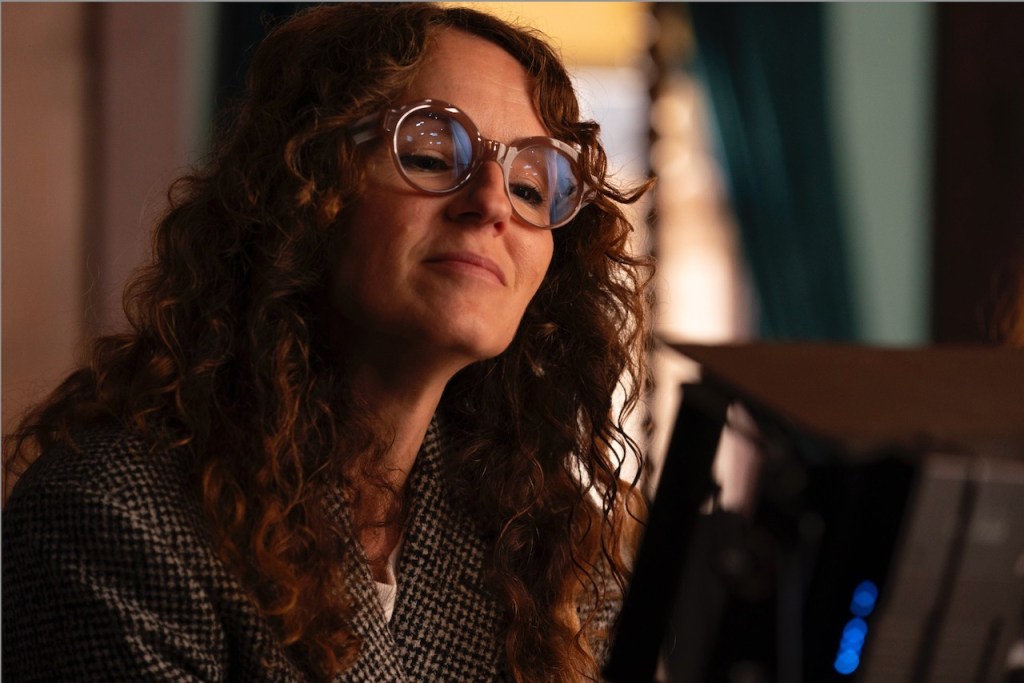
Alysse Leite-Rogers at the monitor enjoying what she’s seeing. Photo Credit: Ricardo Hubbs
When Calls the Heart, DIRECTING, HallmarK
Step behind the scenes of When Calls the Heart with Alysse Leite-Rogers, who directed Episodes 3 and 4 of this season! Alysse’s passion for storytelling, attention to detail, and love for Hope Valley shine through in every frame. In this exclusive Q&A, she shares fascinating insights about filming, creative choices, and the subtle moments that bring the characters and their relationships to life. From hidden Easter eggs to directing heartfelt performances, get ready to see When Calls the Heart through the eyes of a director who truly understands its magic.
Q: You’ve mentioned that you spend weekends on set, taking everything in as you plan. Do you have a favorite place in Hope Valley? Is it also your favorite place to shoot?
A: My favorite place in Hope Valley is to sit on the swing next to the pond. When no one is there, it’s the most peaceful place on earth. The occasional dragonfly, the buzz of bees—I can completely get lost in my thoughts and feel a deep sense of joy until it’s broken by a PA yelling, “That’s lunch! We’re back from lunch!!!”
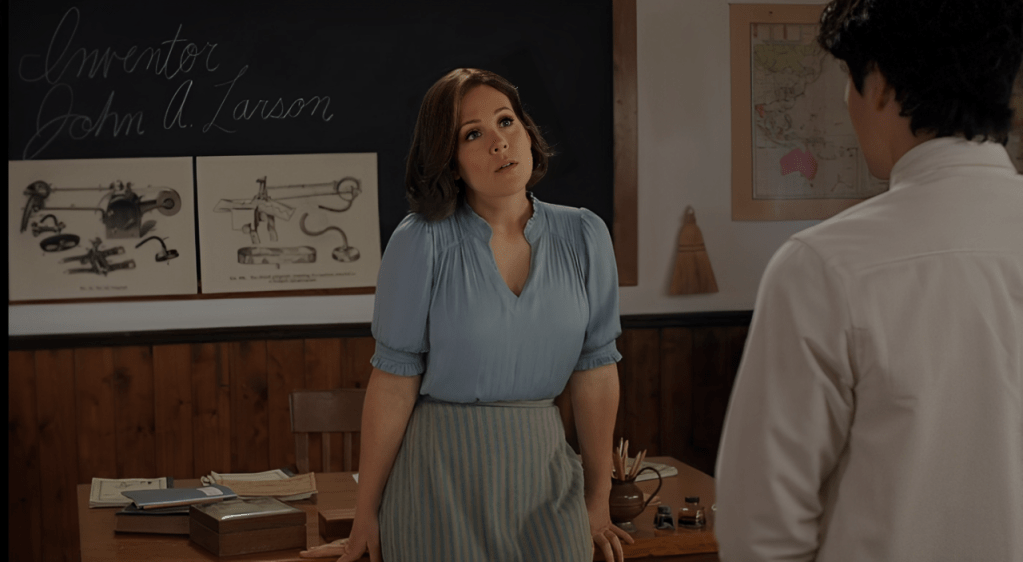
My favorite set to shoot in… it’s a tie between the church and the Salon. I love the challenge of shooting in a small space. The floor is beautiful in there. I love to use the mirror and play with the reflections, and there are so many great set-decor glass bottles to dress in or shoot through. The glass reflects the light so beautifully. The church, because I love the chalkboard, obviously, and the room to choreograph a scene. I know… the exact opposite of what I said I liked about the Salon.
Q: You’ve shared that you drew inspiration from movies/series like Legends of the Fall, Footloose, Dirty Dancing, and Gilligan’s Island. Were there any other influences we may have missed?
A: I pulled a few images from the movie Waiting to Exhale. There’s a dancing scene with an extreme close-up (ECU) of hands with out-of-focus white lights—I recreated that look for Molly & Jed’s dance outside. It inspired the white lights which just enhanced the tender moment between these two characters.
Q: There were several subtle details in Episodes 3 and 4 that fans picked up on. Can you elaborate on any of these?
A: Absolutely!
- Oliver mimicking The Thinker statue – Ha! Yes, The Thinker. No one had brought that up! I saw the sculpture in person in Paris a few years back and was so struck by it. When I saw it as set dressing in the library, I jumped for joy! I was searching for something to start on—to open the scene with. And it was perfect. It signified his contemplation. Oliver was a “still waters run deep” kind of guy, and I loved that he was studying and trying to learn, evolve, and change his narrative. It’s the iconic symbol of thinking, so having us rack from the foreground to Oliver in the same position at the desk was intentional. Thank you for catching that!
- The Keeper Photo on Nathan’s work desk in the Mountie office – I take no credit for ‘The Keeper.’ That was our fantastic on-set dresser.
- Nathan closing the schoolhouse door before the dance – Nathan closing the door for the dance just makes it more intimate. Private. Sometimes choices are about the logistics of filming—i.e., losing the light, not having extras in the deep background. But when you have the luxury of making the choices all about story, it’s the best. Often, we will shoot a night scene during the day and vice versa, so seeing out the doors is always something to discuss. For example, in the teenage dance, which in the story takes place at night, we shot that during the day with blacked-out (tented) windows, which we call Day for Night—D4N. So we had to save the shots angled towards the door for when it was actually night outside, which we call Night for Night—N4N. When at all possible, you want the doors open for cinematic depth. It simply just looks richer, better. But in this case, I wanted Nathan to close the door. Maybe he was anticipating having this dance with her? Kind of attractive that he thinks ahead, I’d say.
- Nathan moving Oliver’s cup away when the inspector returns – Nathan moving his cup away was all Kevin. He suggested it, so I said yes! I love it. So glad those little choices are noticed!
- Elizabeth entering the barn through the back door for her date with Nathan – Elizabeth entered through the back door for several reasons. One, I wanted it to feel ‘private’, a little secretive and seductive, which I think not making the obvious choice helps to sell that, especially with her line, ‘What if they see us?’ It wouldn’t make sense if she just walked right in from the open she always walks in through. It’s just enough for the audience to go, “Hmm, that’s different.” Builds a bit of anticipation in a very slight-of-hand way. Also, to keep the smoke in. We had smoke machines to give it a certain aesthetic look, and it just disappears so quickly in the barn when the doors are open. It’s a big space to fill.
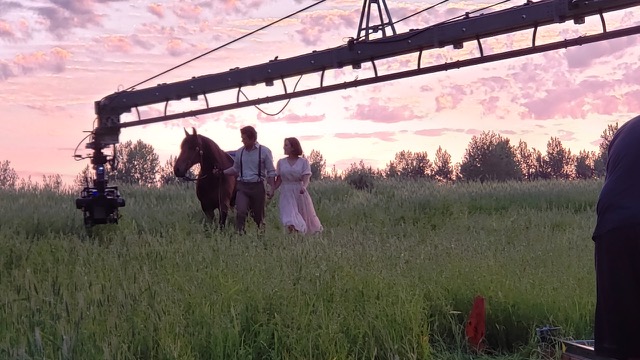
Q: Last season, you directed the scene where we see Nathan and Elizabeth from behind through her doorway. This season, you directed their horse ride through the barley field. As a director, how gratifying is it to help shape an on-screen relationship over time?
A: It’s wonderful to be able to build an on-screen relationship of any kind over several seasons. I rely heavily on the actors to guide that. They know their characters and everything they have said to one another in a way that I can’t possibly. With Nathan and Elizabeth, the actors are so collaborative, open, and receptive that we really craft a scene together. It’s teamwork. But I do love choosing small moments that tell a big story. A look, a touch, a gesture. So much trust, love, and devotion in the smallest moments.
Q: You’ve mentioned that you like to give actors space to explore a scene. How does that approach evolve when working with two actors who have such natural chemistry?
A: Part of the answer above, but really Erin (Krakow) and Kevin (McGarry) have such a wonderful comfort in each other as friends so it just naturally translates onto the screen. I just get out of the way. Their instincts are so in sync.
Q: At the beginning of episode 3, Nathan and Elizabeth have a conversation about a “grown-up date” that is interrupted by Oliver in the Mountie office. The scene moves through a range of emotions—flirty, romantic, serious, and back to flirty. How do you navigate scenes that transition through so many emotional beats?
A: Talking about the subtext—that’s where you point your camera. When you do your scene study homework you’re asking the questions:
- What does each character want in this scene?
- Do they get it?
- How are they influenced by the other characters in the scene? Why? What is going on?
Humans are beautifully complex and contradictory beings, and searching for reactions that are truthful to that character is always at the forefront. So, discussing this with the actors if needed, but not always. They do their own homework and make their choices. As a director, I watch. I watch them as an audience member. In a complex scene, you are doing it many, many times, in wide shots and in close-ups, so that you have reactions and an opportunity to build and heighten the emotional beats in the edit.
Q: You’ve mentioned that you love pairing Erin and Pascale (Hutton) together. The woods scene was an extensive shoot and involved a lot of planning. Pascale shared that she ad-libbed at the end of the scene with Kavan. How do you prepare for a complex scene while allowing room for spontaneous comedic or sweet moments?
A: I dragged my poor husband out with me on the weekend to block this scene. He inadvertently ends up being a stand-in and is in all my shot building, with my lens app playing multiple characters (which he greatly dislikes). You MUST have a plan. It can change ‘on the day’ when shooting, but you have to go in with a visual representation in your head. It just lessens the stress when you’re fighting weather, time, and unforeseeable hiccups when you have a place to return to. It’s amazing how it can get away from you if you’re not ready. So by having a shot list—knowing all the beats of the scene and what you need to isolate—then it gives you the confidence and freedom to explore.
Pascale adding in the line about ‘so attractive’ to Lee was brilliant. Erin and Ben just went with it, and it added a whole new dimension to the scene. I just hate that I didn’t think of it!!! Darn Pascale! I’m just kidding, of course. When that happens, it’s just thrilling. It just elevates a scene. That’s what I absolutely love about my job. I do my part to make it good, then the people around me make it better!
Q: The back-and-forth scene between Lucas, Bill, and Lee at the beginning of episode 4 was so well-executed. Can you share your thought process behind shooting it that way?
A: We did what is called a locked-off camera, where it literally is completely locked and doesn’t move. Nothing changes; it helps to have sharp jump cuts between the two actors. It makes it funnier—punches up the comedy in the cuts. So we check the headroom for both Chris and Lee to see how they fit in the frame and rehearse each to make sure we see the parameters of where they will reach out, etc. Then we commit to the lock-off. We did this process for the three different setups/sizes in the scene.
Q: Do you have a scene from these two episodes that you are particularly proud of?
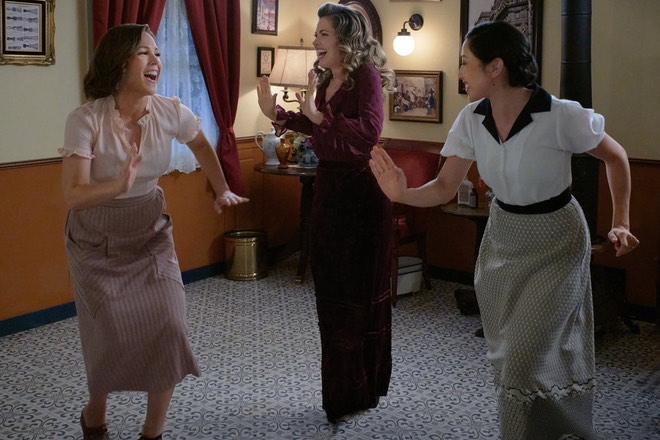
A: I love the dancing scene in the Salon because it ‘showed up’ in the cut. What I mean by that is, when we were shooting, it felt stagey, awkward, long, and I wasn’t sure the cast or crew got what I was doing. But it turned out just like the preview in my little movie screen in my brain.
I also loved the scene when Lee visits Faith for his check-up. I thought their performances were stellar, and Lee’s deep truth and vulnerability just got me. I may have choked back a tear or two at the monitor.
Q: Now that you’ve worked with the cast and crew for three seasons, does that familiarity help your creative process? Were there specific scenes—like the ride date—where knowing the actors’ strengths helped you to take risks that you might not normally have taken?
A: Yes, for sure. There is more trust. Trust is everything in the director/actor relationship. The horse-riding scene, for example—because of time and the setting sun, I’m pretty sure I wouldn’t have taken that risk the first season. It’s a great way to not get asked back if it failed! It was only that experience of having worked with them that I knew they could pull it off. In so many ways—their skill on a horse, their comfort to improvise, their phenomenal craft, and staying in character. They need so little guidance and are just so willing to go with it. Overall, you can anticipate the way each actor will respond to a scene or what concerns they may or may not have. It’s so wonderful to return and have that knowledge. I have so much respect and admiration for this highly talented group of people.
Q: What’s the biggest challenge when directing WCTH?
A: Biggest challenges on WCTH would be flies in the summer months. Annoying little buggers that can ruin a beautiful take because they land right on an actor’s nose while they are spilling their heart out. We can deal with the ones flying through the frame in the background by digitally removing them, but when actors start waving them off their faces, it usually means we have to go again. And when time is nipping at your heels or there are a lot of moving parts, it can be a challenge. Production does their best with supplying sticky trees, etc., but it’s just the nature of our location. Everyone is great, and the cast and crew are used to it, but the first season caught me off guard. Those tiny little things cost some money and time!
Q: If you could step into Hope Valley as a character for a day, who would you be?
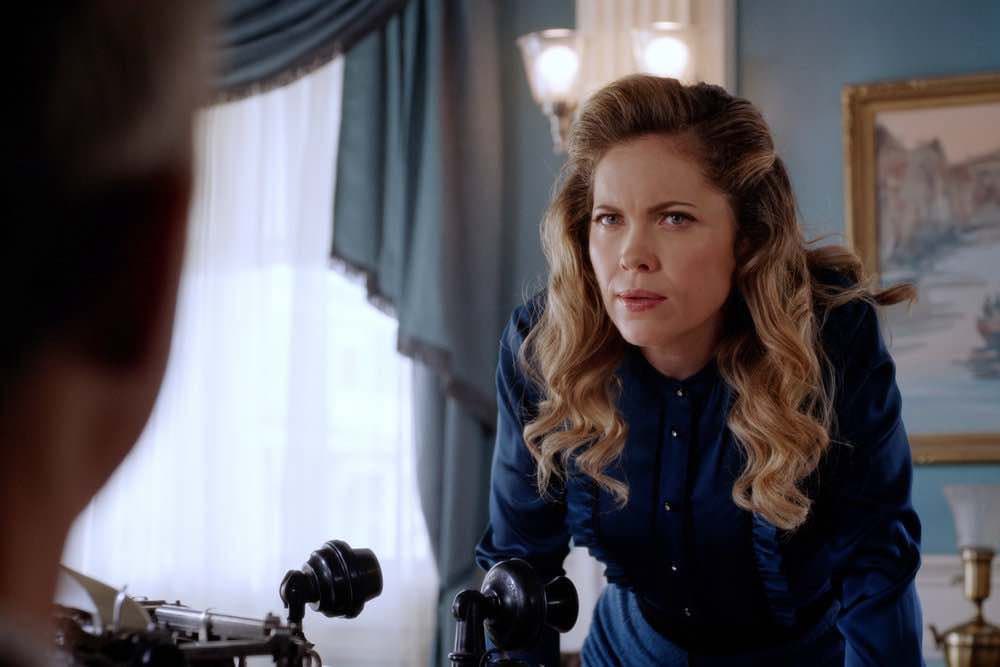
A: Love this question! I would choose to be Rosemary. I love her passion, her dramatic energy. Her mind is always whirling. She just tells it like it is. She lives and loves large. It would be so fun to walk into a room, any room and just own it the way she does.
Q: Is there a particular storyline this season that you wished you could have directed all the way through?
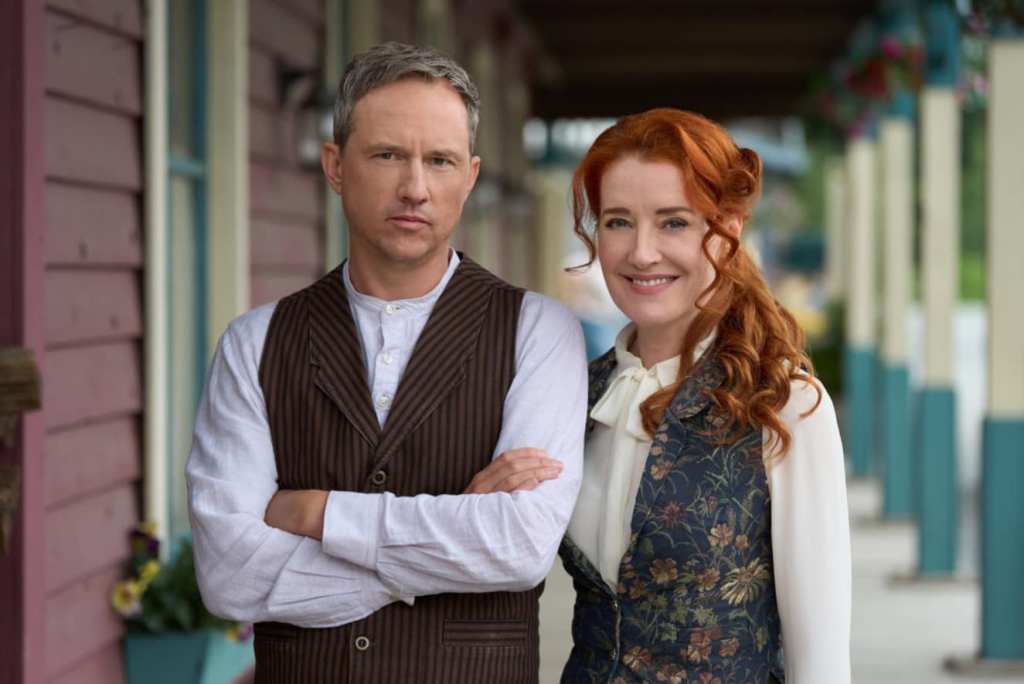
A: I would’ve LOVED to shoot the continuation of Molly and Jed’s relationship! Absolutely.
Q: When approaching an episode, how do you balance staying true to the show’s vision while also bringing your own creative style?
A: Very good question. It’s a dance. You absolutely have your own style, air, and ideas, but you have to stay within the parameters of the show. In other words, I can’t go in and say we’re going to do the whole show handheld. Goodbye and thank you. So you have to be familiar with the look, style, and visual language of the show, but then you put your own flair in a way that still is in the show’s wheelhouse. If something is very different, I do run it by the producers, the higher-ups, to get approval. And I always make sure if it’s not well received in the edit, that there is a safer choice.
Q: What’s one thing about directing When Calls the Heart that people might not realize?
A: I think the fan base has blown my mind. My first season, I was told that fans are very detail-oriented. Ok, sure. But seeing and hearing from the fans following season 1 was completely and utterly shocking to me. The dedication, the love of the show, the absolute, 100% buy-in from the fans is something I’d never experienced before. So the question is more about my colleagues—on other shows—they don’t realize the difference it makes in knowing your work is really looked at. Appreciated. That all your choices make a difference. That the work that you put in means something. That in itself is something I am so grateful for. It’s a privilege to tell these beautiful stories in an environment of friends and good-hearted people.
Alysse’s behind-the-scenes perspective gives us a whole new appreciation for the artistry and collaboration that make When Calls the Heart so special. From carefully framed shots to spontaneous moments of on-set magic, her insights reveal just how much thought goes into every scene. What was your favorite takeaway from this Q&A? Did anything surprise you? Let’s keep the conversation going—share your thoughts in the comments below and on Instagram @stephanie_heartnmotion!
 Heart In Motion Media
Leave a comment