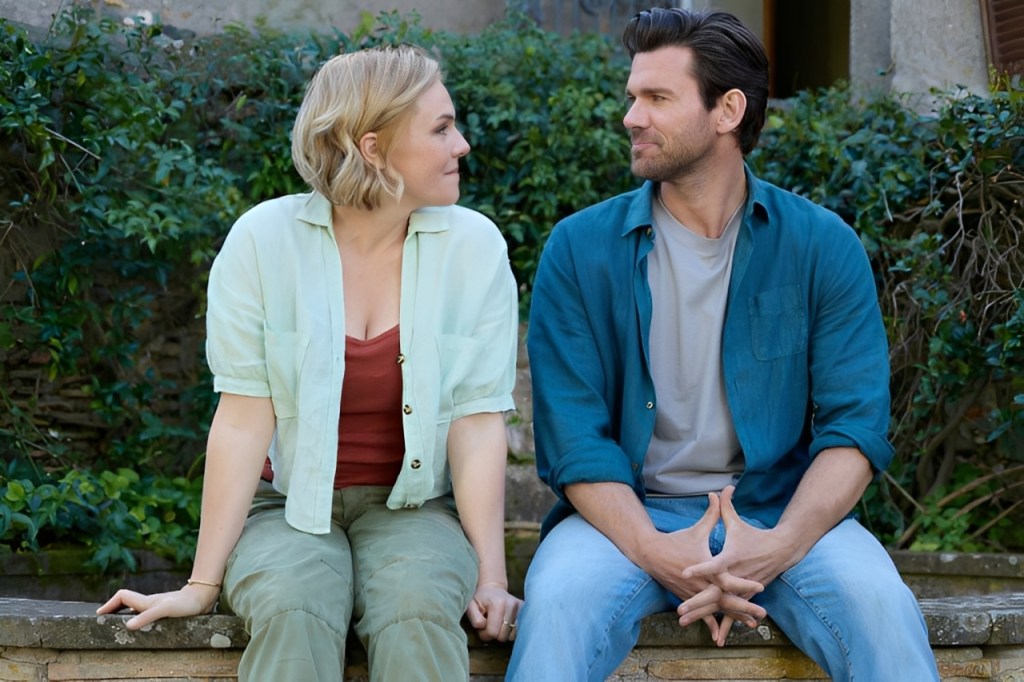
I’ve watched Villa Amore more than once—and each time, I find something new to love. It’s the kind of film that moves softly but deeply, like a quiet conversation you didn’t know you needed. From the opening moments, there’s a sense that this story isn’t going to rush you. It’s going to let you feel everything.
Liara’s journey begins in heartbreak, but not in chaos. She’s been left just before her wedding, and instead of crumbling, she chooses to go on the trip to Italy alone. That choice sets the tone for everything that follows—graceful, brave, and a little impulsive in the best way. When she buys a villa tied to her parents’ past, it’s not a grand romantic gesture. It’s a deeply personal one. She’s choosing to rebuild—physically, emotionally, generationally.
Eloise Mumford brings such warmth and honesty to Liara. There’s a steadiness to her performance, even in the vulnerable moments. She lets us see someone who’s figuring it out in real time, someone who’s been hurt but still believes something beautiful could be ahead.
And then there’s Leo. Kevin McGarry plays him with such quiet clarity. He’s not the kind of romantic lead who charges in and changes everything—he’s the one who shows up, pays attention, and slowly becomes essential. Their connection doesn’t flare up all at once–although there are looks from the beginning. It builds gently, with trust, shared space, and little moments that mean more than either of them expected. There’s something so satisfying about watching a romance unfold like that—with patience and intention.
One of my favorite parts of the film is how grounded everything feels. Even the moments of emotional weight—like Liara speaking about her father—are handled with such care. The villa itself becomes more than a setting. It holds grief and memory and hope all at once. Watching her fix it up, piece by piece, mirrors everything happening inside her.
And while the love story is lovely, what keeps pulling me back is how natural it feels. Neither of them needs saving—but together, they’re better. There’s an ease between them from the start, something unspoken but deeply felt. It’s not forced. It’s not flashy. It just feels real. They get each other in a way that’s quiet, but undeniable.Liara doesn’t wait to be rescued. She makes decisions. She takes risks. She grows. The people around her—whether they’re helping with construction or stubbornly guarding the town’s traditions—all add something to her healing. Even Baci the donkey somehow feels like part of the process.
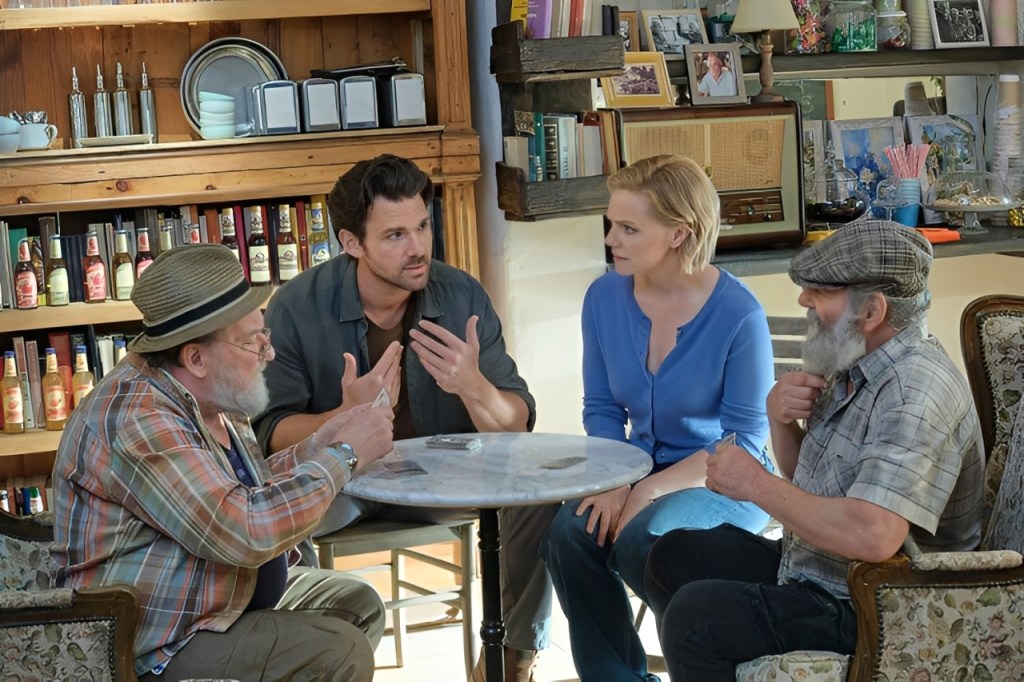
What I appreciated most is that nothing about this film felt forced. The conversations feel real. The silence feels real. Even the ending isn’t wrapped in a perfect bow—it’s more like a door opening. (Can we get a sequel? Or, at least another movie with Eloise and Kevin?)
Villa Amore is the kind of story that gives you room to breathe. It trusts that small, thoughtful choices matter just as much as sweeping declarations. It offers comfort without pretending everything is easy. And for me, that made it one of the most rewarding watches I’ve had in a very long while.
If you’re looking for something soft but meaningful, this one’s worth your time. And maybe, like me, you’ll find yourself coming back to it—not because you missed anything the first time, but because it simply feels good to be there again.
Have you seen Villa Amore? What did you think? Leave a comment below!
Also, have you seen my chats with Executive Producers Kate Gordon and Alexandre Coscas?


 Heart In Motion Media
Leave a comment